


Urban Street Furniture
Urban street furniture plays an essential role in shaping the experience, functionality, and identity of public spaces. It includes the everyday elements found along sidewalks, plazas, parks, transit areas, and commercial streets that support comfort, safety, convenience, and social interaction. Although often overlooked, these objects influence how people move through a city, how long they stay in a place, and how welcoming an environment feels.One of the most common forms of urban street furniture is seating. Benches, chairs, and resting ledges provide places for pedestrians to pause, relax, and observe their surroundings. Well-designed seating encourages social interaction and makes streets more inclusive for older adults, children, and people with mobility challenges. When placed thoughtfully, benches can turn a simple walkway into a livable public space where people gather naturally.Another important category is lighting. Street lamps, pedestrian-scale lights, and illuminated bollards improve visibility during evening hours and contribute to safety and comfort. Good lighting helps reduce accidents, supports nighttime activity, and highlights architectural or landscape features. Beyond function, lighting can also add character and atmosphere, helping define the visual identity of a street or neighborhood.Waste bins, recycling stations, and ash receptacles are also important parts of street furniture. These elements help maintain cleanliness and encourage responsible public behavior. Their placement and design should be practical, durable, and easy to use. When public spaces are well equipped with waste management solutions, they remain more attractive and pleasant for both residents and visitors.Other examples include bicycle racks, bus shelters, planters, wayfinding signs, public drinking fountains, and barriers. Bicycle racks support sustainable transportation by making cycling more convenient. Bus shelters offer protection from weather and help improve the waiting experience for transit users. Planters bring greenery into the urban environment, softening hard surfaces and enhancing visual appeal. Wayfinding signs guide pedestrians and visitors, making cities easier to navigate. Barriers and bollards can help control traffic flow and protect pedestrian zones while still allowing open access where needed.The design of urban street furniture should balance aesthetics, durability, functionality, and accessibility. Materials must withstand heavy use, changing weather, and occasional vandalism. At the same time, the style should complement the surrounding environment, whether modern, historic, or natural. Inclusive design is especially important, ensuring that products are easy to use for people of all ages and abilities.In many ways, urban street furniture defines the human scale of a city. It transforms empty public areas into active and inviting places. By improving comfort, order, and beauty, these elements contribute to a better urban life and a stronger sense of place.
Products
Category:
-
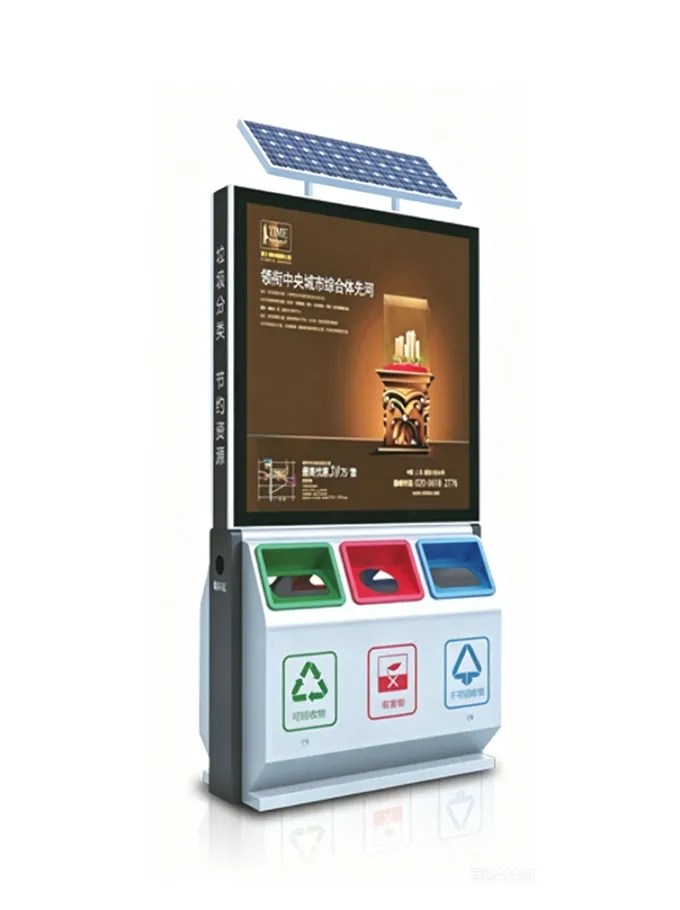
Smart Recycling & Information Station Series
Category: Infrastructure ProductsBrowse number: 672Number:Release time: 2026-08-19 17:01:26The Smart Recycling & Information Station Series combines classified waste collection with advertising, public information and optional solar-powered equipment. Designed for streets, communities, parks and commercial areas, the stations can include multiple collection compartments, static panels or digital displays. Dimensions, waste categories, colors, graphics and electrical functions are configured according to the project scope and local waste-management requirements.
Blog
Category:
No search results found!
Solutions & Projects
Category:
No search results found!
Video
Category:
No search results found!
Download
Category:
No search results found!
Job
Category:
No search results found!
Featured Products
No search results found!



 Phone